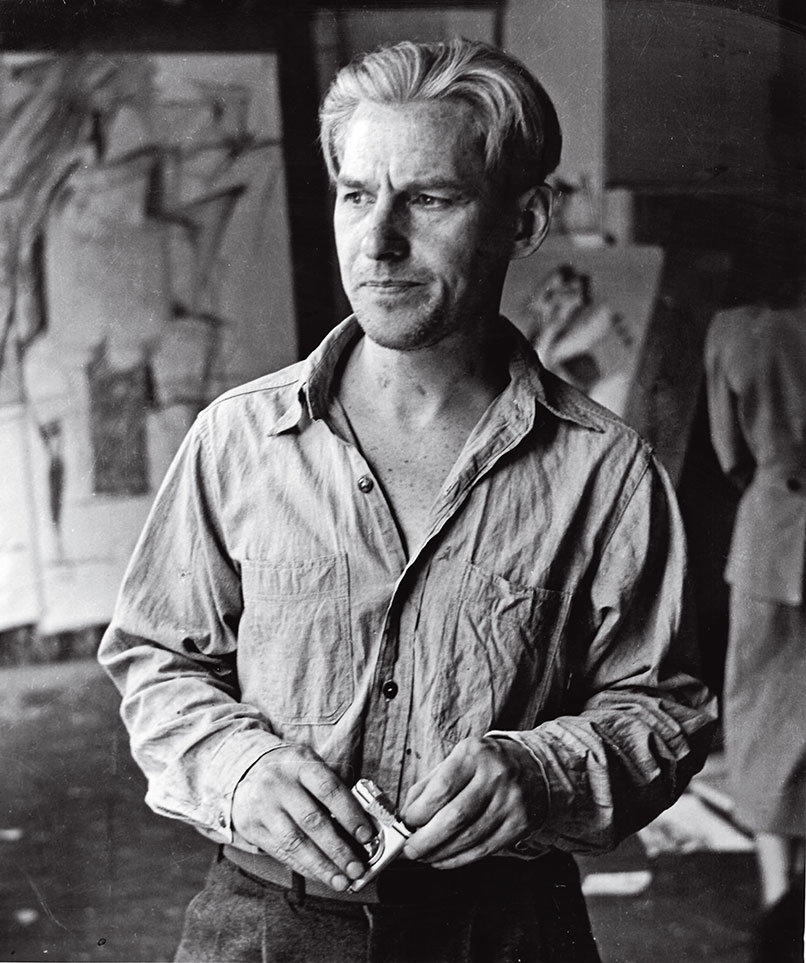
Willem de Kooning is often called “the artist’s artist”. He was born in Rotterdam, Netherlands, where he grew up in a poor family and received training in fine and commercial arts at the Rotterdam Academy. In 1926, he set out for Argentina in search of a future in art, but he did not have the money to buy a ticket. He stowed away on a ship, and when it docked in Virginia, he disembarked there. Evading immigration authorities, he reached New Jersey, and thus began his new life.
In New Jersey, de Kooning found work as a house painter. Large brushes and fluid paint were the tools of this trade, which he continued to use throughout his artistic career. His skill in drawing and craftsmanship helped him succeed in this work, and the same proficiency later contributed to his success as a painter.
From New Jersey, de Kooning moved to New York, where he shaped himself as an artist. When he arrived, the Jazz Age was in full swing, advocating freedom in both song and voice. Jazz broke the refined and disciplined constraints of classical music. Influenced by this spirit, artists of the time advanced abstract painting, and de Kooning too was drawn toward abstraction. In New York, he came into contact with artists like Henri Matisse, John Graham, and Arshile Gorky, with whom he developed close friendships.
In 1929, the Great Depression brought the Jazz Age to a halt. During the 1930s, under President Franklin D. Roosevelt’s Works Progress Administration programme, de Kooning was commissioned to design public murals. He worked under Fernand Léger, which proved to be a significant phase in his artistic life. Although his formal study of murals remained incomplete, their influence is evident in his abstract works. His experience with murals encouraged him to become a full-time artist.
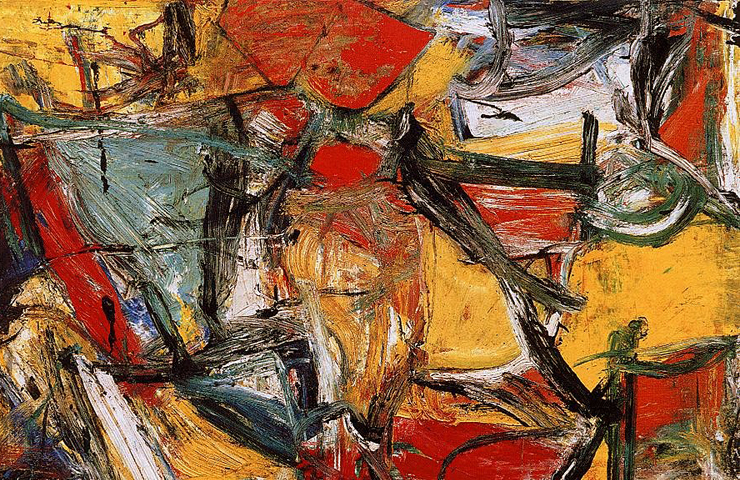
By the 1940s, de Kooning had become a well-known artist. Over a career spanning nearly seven decades, he worked in multiple styles. The freedom of jazz remained visible in his work throughout. Free from rules, guided by an independent consciousness, and expressing himself in his own way became his strength. His compositions often appear awkward, contradictory, or inconsistent, yet these very qualities push his art forward. He was influenced by contemporary life and art, as well as by earlier artists, but he synthesised these influences into a unique style that cannot be confined to any single category.
Throughout his career, he continuously transformed his work, often breaking himself down and reconstructing anew. He experimented across a spectrum from figuration to abstraction, with a distinctive style emerging from the combination of the two.
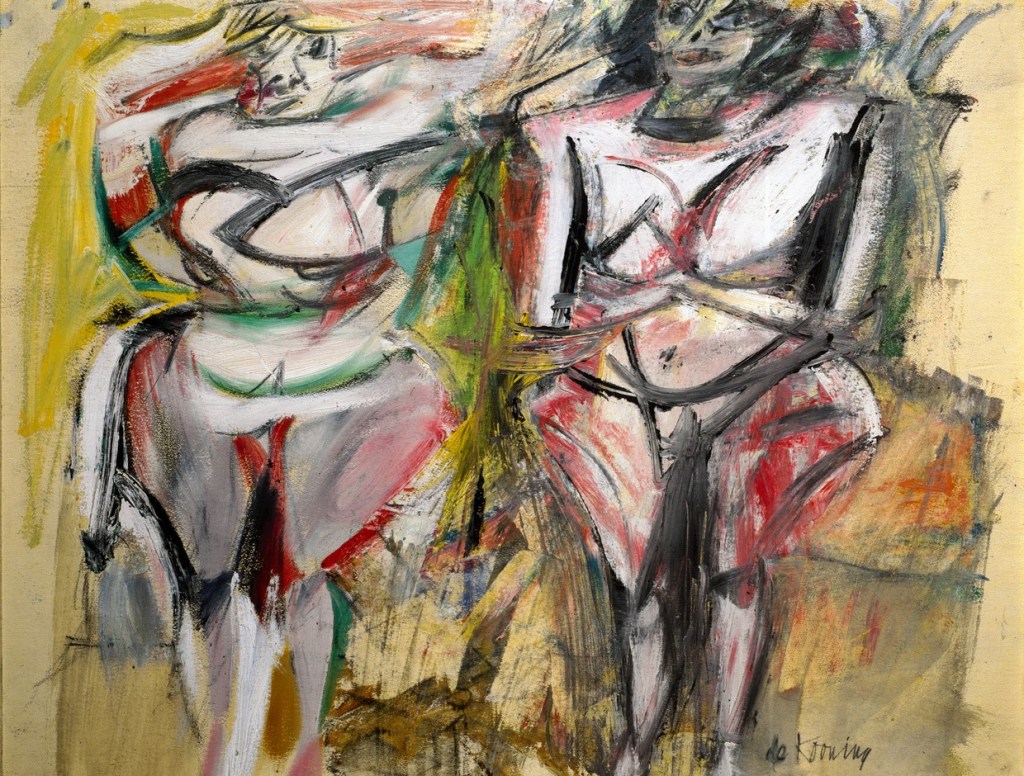
He once said that he was never interested in how to make a good painting; rather, he was interested in seeing how far a work could go. He never accepted the concept of perfection or any ideal. When beginning a painting, his focus was not on making it perfect but on pushing it as far as possible. This is why many of his works appear unfinished—he never intended to complete them in the conventional sense; he would go as far as he could and then leave them.
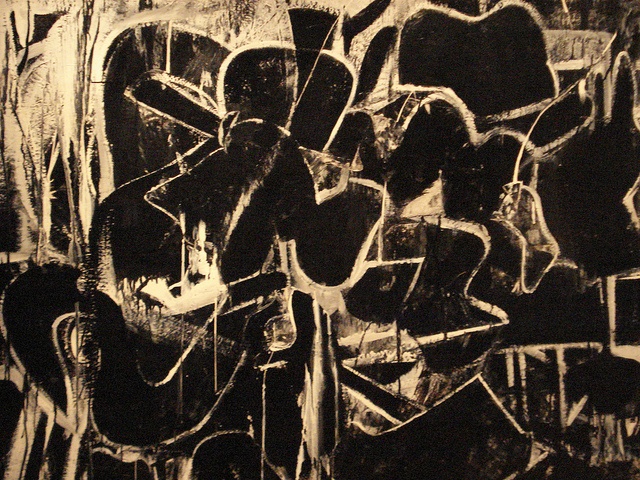
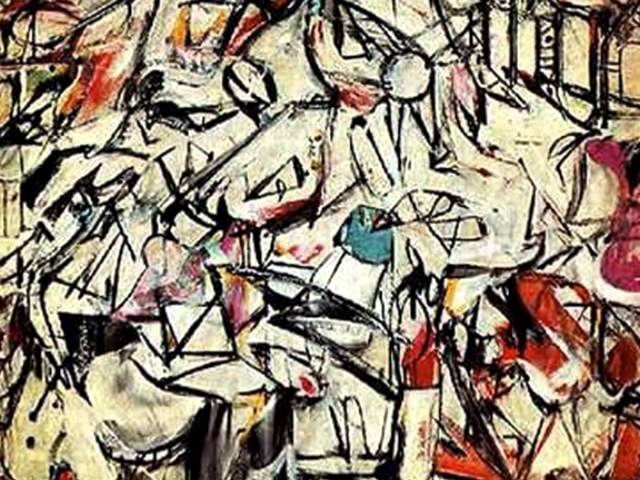
Among abstract expressionist artists, de Kooning is one of the most renowned painters. His works display intense dynamism and a constant fluctuation and reversal of emotions. Through cubist fragmentation and distortion of forms, he created emotional tension, while his brushstrokes infused his paintings with movement. Whether fully abstract or semi-abstract incorporating human figures, his works are marked by bold, heavy lines and intense, layered application of colour. Rarely does a colour seem static in his paintings; instead, colours merge and advance, giving a sense of continuous motion that keeps his works alive.
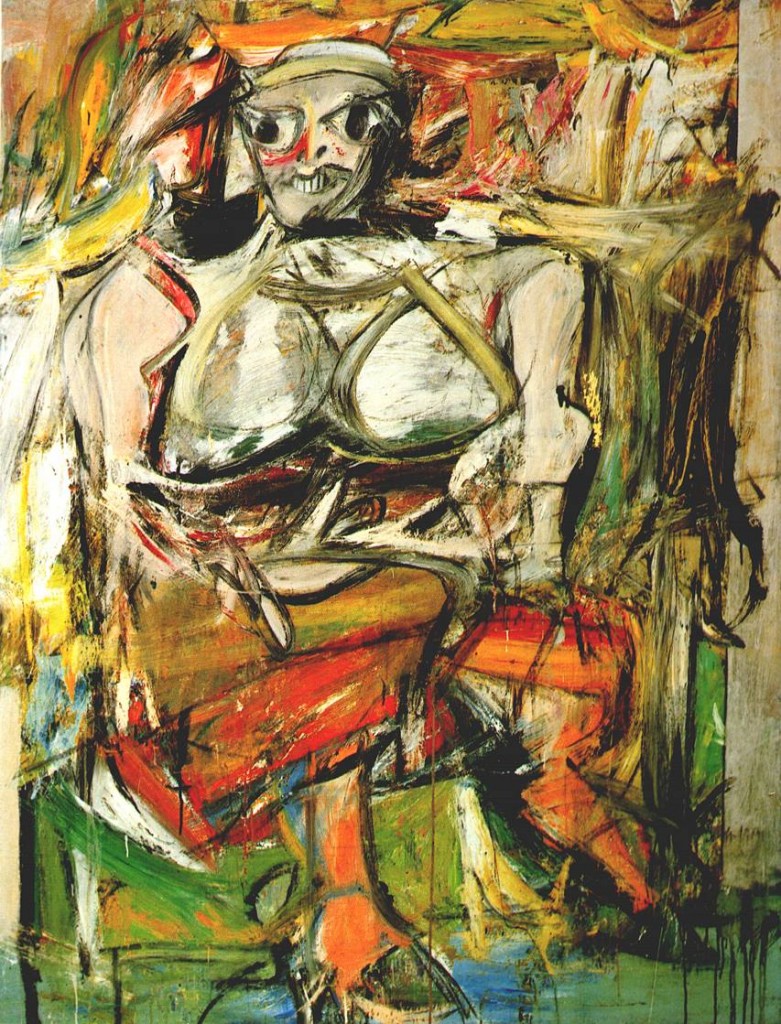
It is believed that he developed a distinctly unique abstract style among his contemporaries—one that combined cubism, surrealism, and expressionism—yet retained his unmistakable personal touch in every painting. While many of his contemporaries moved from figuration toward abstraction, de Kooning consistently integrated human forms—especially the female body—into abstraction, creating a new visual language. He often said that his true subject was the relationship between human existence, space, and time. To explore and reveal this relationship, he continued to experiment throughout his life.
In many works, he combined the human body with abstract landscapes, helping him discover new themes. This is why he is considered one of the most energetic artists of his time. He remained deeply connected to his era and never hesitated to dismantle and reinvent himself in response to changing times. After the influence of jazz, he also engaged with popular culture and neo-Dada movements. As a result, many younger artists were influenced by his work. Artists like Cecily Brown reinterpreted the erotic gestures in his later paintings, extending his legacy in new ways.
De Kooning himself had done something similar earlier—adopting Picasso’s cubism and fragmenting human figures to reassemble them in new forms. This resulted in representations of the fragmented and disturbed modern individual. The backdrop of world wars and subsequent political conditions likely contributed to this, as his figures often reflect uncertainty, despair, pain, and anxiety. The sense of existential crisis in modern humanity appears in his works, sometimes as figures dissolving into the ground. This can also be interpreted as the “unfinished” quality seen in his paintings.
De Kooning spoke of a dynamic incompleteness in his works, as human bodies in his paintings often appear in motion—shifting, breaking, and reforming. He frequently revisited and reworked his paintings. His works resemble a laboratory where the process never truly ends. For this reason, his art is often associated with Harold Rosenberg’s concept of “action painting”. His paintings are spaces where something is always happening, and in this ongoing process, the artwork transforms into an intensely dynamic experience.
By Dr Ved Prakash Bhardwaj
All images are from Google and used only for reference.
 Art News India
Leave a comment