
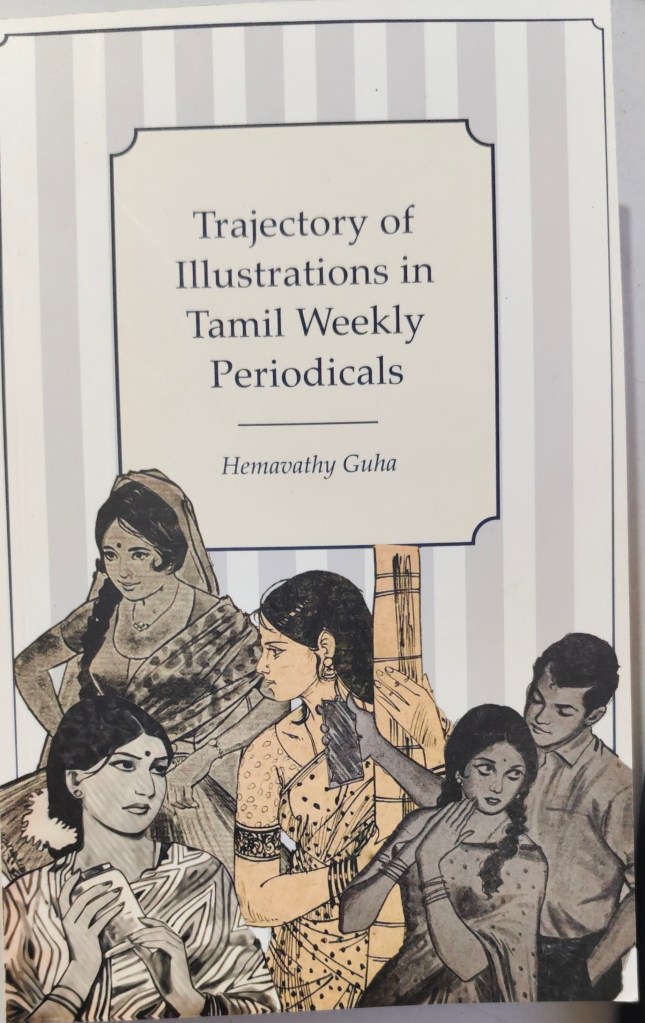
Print media such as newspapers and magazines have played a highly influential role in mass communication. Within this sphere, illustrations published in magazines in Indian languages have held particular significance. The publication of newspapers and magazines in Indian languages began in the nineteenth century, and by the early twentieth century, they had become an integral part of everyday life. During the period of the freedom struggle, vernacular journalism played a dual role: on one hand, it strengthened the feelings of independence among the masses, and on the other, it contributed to social reform. In this process, along with news, ideas, and literature, illustrations also played an effective role.
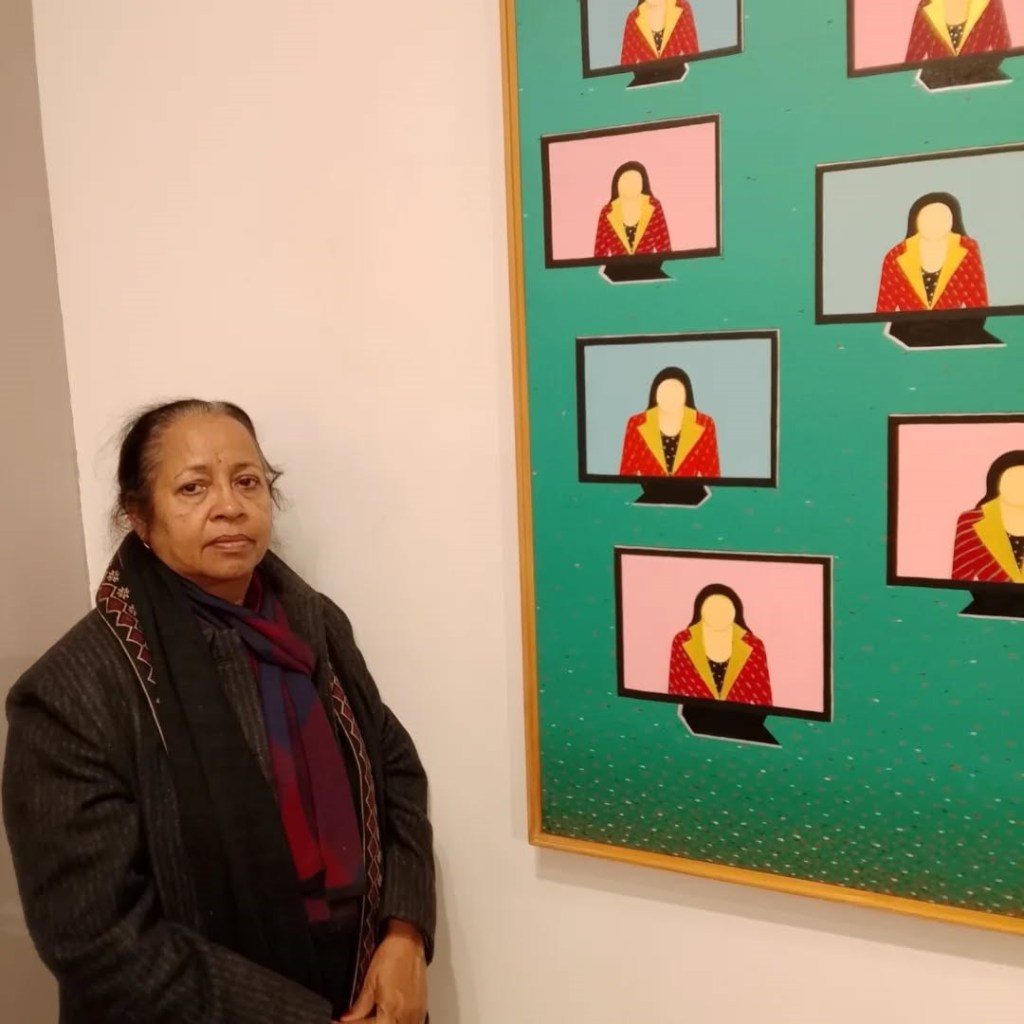
Hemavathy Guha with her painting.
Hemavathy Guha’s book Trajectory of Illustrations in Tamil Weekly Periodicals explores the role of illustrations in Tamil journalism, especially in weekly publications. The book focuses primarily on the works of four artists—Artist Maya, Jjayraj, Ramu, and Maniam Selvan—but it also includes works by other artists.
While introducing the book, Hemavathy Guha also examines the history of Tamil journalism and explains how the publication of illustrations began. Illustrations in magazines were generally of two types: those that accompanied stories or articles and had a narrative quality, often emphasizing color and form; and a large number of satirical drawings and cartoons. The book includes both types of illustrations. In addition, the author has incorporated other creative works of these artists.
The author has put considerable effort into this book. She has relied not only on library archives of newspapers and magazines but also prioritized interview with artists. Most of the works included in the book are from the post-independence period, although some earlier illustrations are provided for context. These works reflect both artistic merit and journalistic qualities. Many illustrations related to advertisements are also included. In this way, the author has encompassed the wide world of illustration.
The book has been published by Dot Publication, a subsidiary of Dot School of Design, Chennai. The continued publication of such works would be highly desirable.
 Art News India
Leave a comment