Art History
also see below link
https://artnews-india.blogspot.com/2026/05/blog-post_24.html

L’Estaque, turning road, André Derain, 1906
The term ‘Les Fauves’—meaning “the wild beasts”—was coined by the French art critic Louis Vauxcelles after encountering the paintings of Henri Matisse and André Derain at the 1905 Salon d’Automne in Paris. Shocked by the violent intensity of their colours and seemingly uncontrolled brushwork, Vauxcelles compared the paintings to the work of “wild beasts.” Although intended as criticism, the label eventually became the defining name of one of the first avant-garde movements of twentieth-century modernism.

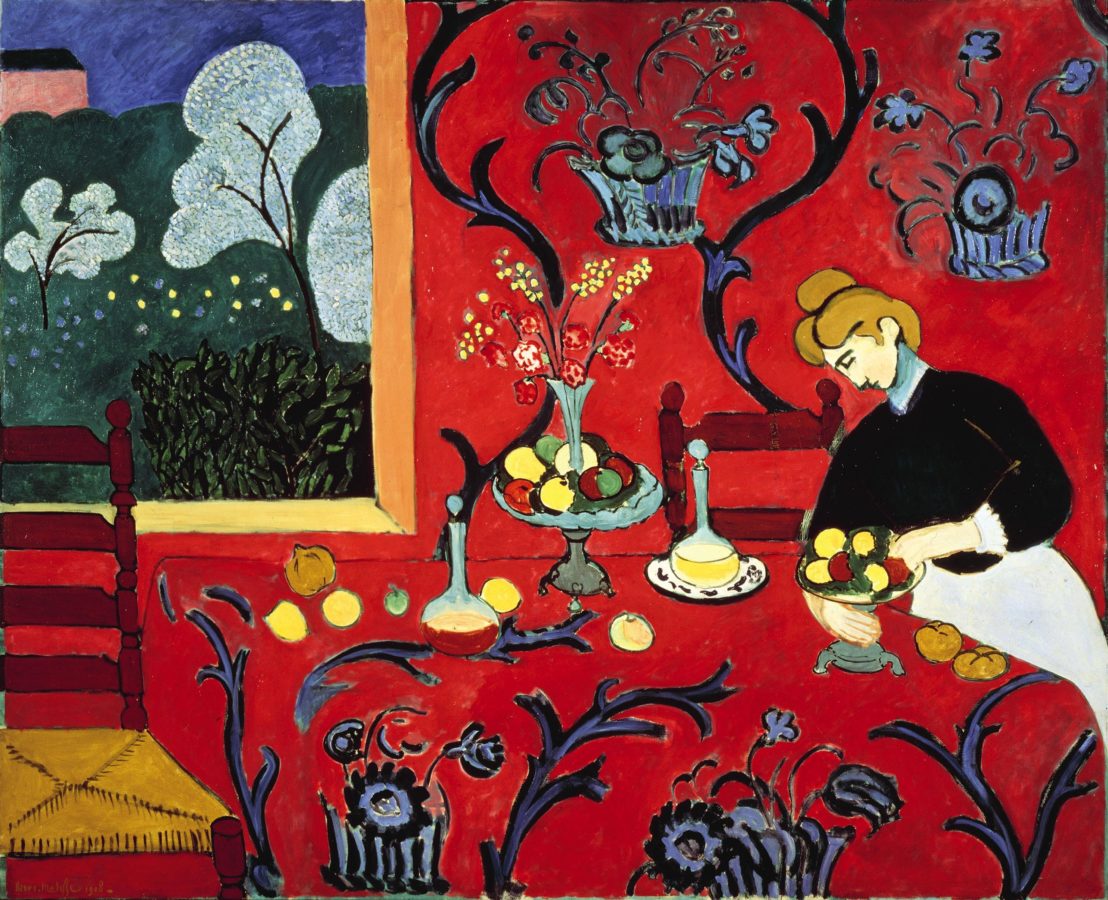
Henri Matisse
The paintings exhibited by Matisse and Derain were created after a summer spent together in Collioure in the south of France. There, both artists began to abandon naturalistic representation and instead experimented with exaggerated colour, flattened space, and highly expressive brushstrokes. Colours were often applied directly from the tube without blending, producing a raw visual intensity that rejected academic standards of realism. A tree could be red, a face green, and the sea orange—not because the artists observed these colours in nature but because colour itself became an emotional and expressive force.
The simplification of forms was equally radical. Rather than constructing carefully modelled three-dimensional figures, Fauvist artists reduced subjects to broad shapes and outlines. This flattening of space challenged Renaissance ideas of perspective and illusionism that had dominated Western painting for centuries. In many ways, Fauvism represented a decisive break from the traditional idea that art should imitate reality.

Raoul Dufy
Other artists associated with Fauvism included Georges Braque, Raoul Dufy, Maurice de Vlaminck, and Georges Rouault. Although these artists shared an interest in emotional colour and painterly freedom, Fauvism itself was never a tightly organized movement with a formal manifesto. Instead, it functioned more as a loose artistic tendency united by a common rebellion against convention.
Fauvism and the Science of Colour
One of the intellectual foundations of Fauvism lay in nineteenth-century colour theory. The Fauvist painters were deeply influenced by scientific studies of optical perception, particularly theories concerning complementary colours. Complementary colours—such as red and green, blue and orange, or yellow and violet—appear opposite one another on the colour wheel. When placed side by side, they intensify each other visually, creating a sense of vibration and energy.

Georges Braque
Artists such as Georges Seurat and the Neo-Impressionists had already explored colour scientifically through carefully controlled pointillist techniques. The Fauves inherited this understanding of colour relationships but rejected the rigid discipline of Neo-Impressionism. Instead of systematic dots and calculated harmony, they embraced spontaneity, instinct, and emotional immediacy. Colour was no longer descriptive; it became psychological and symbolic.
Influences and Artistic Context
Fauvism did not emerge in isolation. It can be understood as an extreme development of Post-Impressionism, particularly the work of Vincent van Gogh and Paul Gauguin. Van Gogh’s emotionally charged brushwork and Gauguin’s use of flat decorative colour strongly influenced Matisse and his contemporaries. At the same time, the movement drew inspiration from African sculpture, Oceanic art, medieval icon painting, and Japanese prints—all of which challenged European ideas about realism and beauty.
Critically speaking, Fauvism reflected a broader crisis within European culture at the beginning of the twentieth century. Industrialization, urban modernity, colonial encounters, and rapid technological change were transforming social life. In this context, many artists felt dissatisfied with academic traditions and sought more direct, instinctive forms of expression. Fauvism’s explosive colour and emotional intensity can therefore be read as both an artistic rebellion and a reaction to the anxieties of modern life.
A Critical View: Liberation or Decorative Excess?
Although Fauvism is celebrated today as a revolutionary movement, critics have long debated its artistic depth. Supporters view Fauvism as a liberation of painting from the burden of realism. By emphasizing emotion over imitation, the Fauves opened the door to abstraction and expanded the expressive possibilities of modern art. Their work encouraged later movements such as Expressionism and Abstract Art, where colour and form could exist independently from literal representation.
However, critics have also argued that Fauvism’s emphasis on emotional colour sometimes lacked intellectual structure. Compared to the analytical rigor of Cubism or the social concerns of later modernist movements, Fauvism could appear impulsive, decorative, and even superficial. The movement’s intense colours and simplified forms created immediate visual impact, but some art historians argue that this emotional spontaneity was difficult to sustain over time.
This criticism is partly reflected in the short lifespan of the movement itself. By 1908, most of the major Fauvist artists had moved in different directions. Georges Braque became increasingly interested in structure and form, eventually developing Cubism alongside Pablo Picasso. André Derain shifted toward a more conservative and classical style. The renewed influence of Paul Cézanne encouraged many artists to pursue order, geometry, and compositional stability rather than emotional spontaneity.
Only Henri Matisse remained consistently committed to the essential principles of Fauvism throughout his career. Even as his style evolved, he continued to use luminous colour, simplified form, and expressive line to create deeply emotional yet carefully balanced compositions.
Legacy of Fauvism
Despite its relatively brief existence, Fauvism had a profound impact on modern art. It challenged centuries of academic tradition and demonstrated that painting did not need to reproduce reality in order to communicate truth or emotion. By freeing colour from natural description, the Fauves transformed colour into an independent language of feeling and sensation. In retrospect, Fauvism can be seen not merely as a short-lived movement, but as a crucial turning point in the history of modern art—a moment when painting became less about depicting the visible world and more about expressing the inner experience of the artist.
-By Dr Ved Prakash Bhardwaj
Leave a Reply