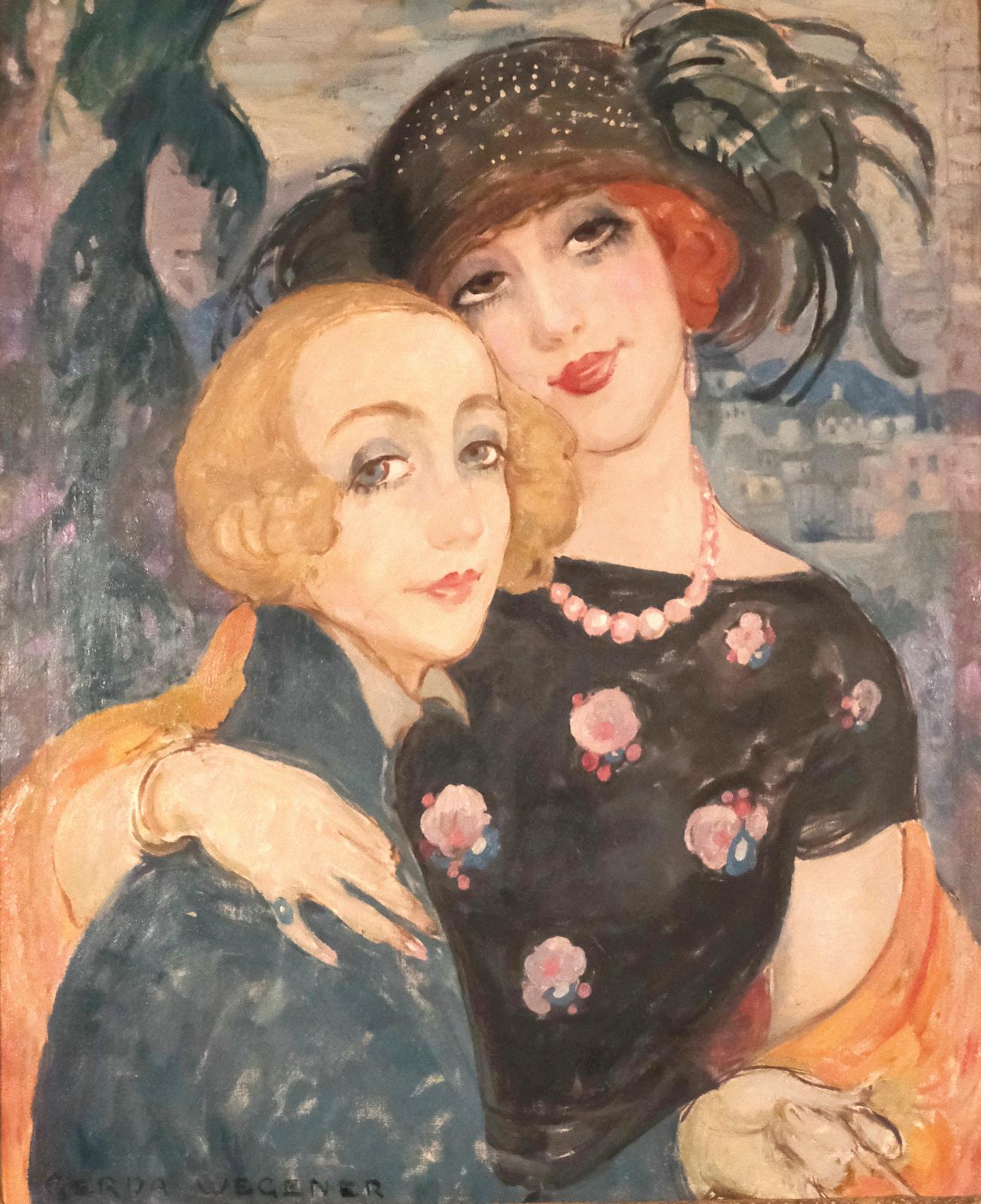
The story of Gerda Marie Frederikke Gottlieb—known as Gerda Wegener—as a woman, a painter, and a lover reveals the true love story shared by her and her husband, Einar Wegener. Passion, devotion, and personal life are all integral parts of her art.

In the early 1900s, two young Danish artists met at the Royal Danish Academy of Fine Arts in Copenhagen and fell deeply in love. Gerda Marie Fredrikke Gottlieb was just 19 when she married fellow art student Einar Wegener in 1904. She would go on to become one of the most celebrated illustrators and painters of the Art Deco era — known for her elegant, sensual portraits of modern women, fashion illustrations for magazines like Vogue and La Vie Parisienne, and works that boldly explored female desire and gender fluidity.

Einar, a talented landscape painter, soon became far more than Gerda’s husband. One day, when a model failed to show up for a sitting, Gerda asked him to put on women’s clothing and pose instead. What started as a practical solution awakened something profound. Einar discovered a deep sense of rightness in those clothes — and Lili Elbe was born.

Gerda didn’t just accept this transformation; she celebrated it. Lili became her favorite muse, the face behind many of her most iconic paintings of graceful, stylish women. The couple moved to the freer atmosphere of Paris in 1912, where Lili could live more openly as a woman (often introduced as Einar’s “cousin”). Gerda’s career flourished, and her art pushed boundaries — elegant, erotic, and ahead of its time.

As Lili’s sense of self grew stronger, so did her determination to live fully as a woman. In 1930, with Gerda’s unwavering emotional and financial support, Lili underwent a series of pioneering gender-affirming surgeries in Germany — among the first documented in modern history. Their marriage was annulled by royal decree that same year, because Danish law did not recognize a marriage between two women. Yet Gerda’s love and loyalty remained constant. She stood by Lili through every step of the transition.

Tragically, Lili Elbe died in September 1931 from complications following a final experimental surgery. She was only 48. Gerda continued creating art and later remarried, but the bond she shared with Lili remained one of the defining relationships of her life.
Their story is far more than the inspiration for the novel and film The Danish Girl. It is a real tale of artistic partnership, radical acceptance, and extraordinary bravery at a time when the world had almost no language.
Courtesy: Arte magazine
Leave a Reply