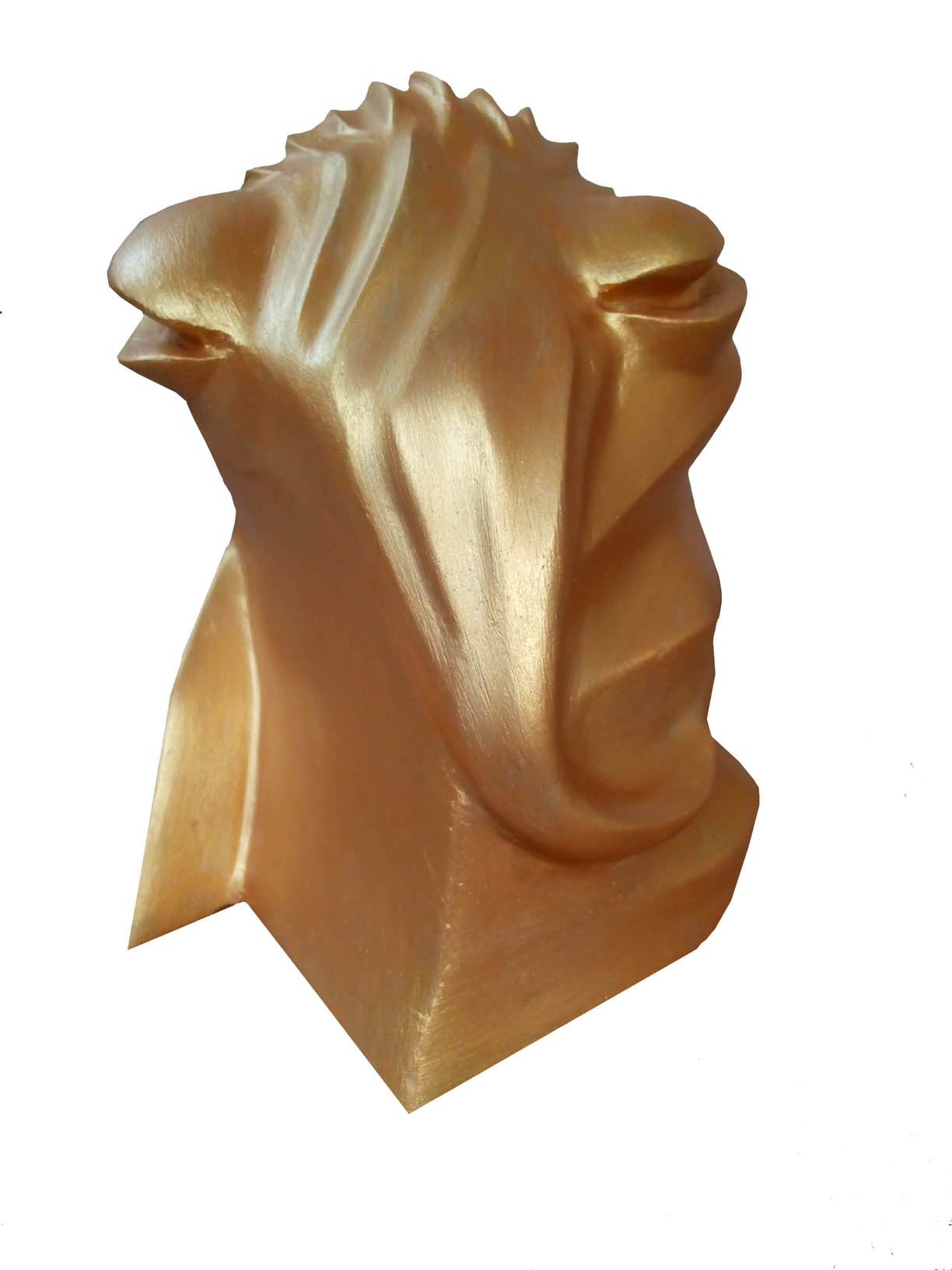

Lord Ganesha has long been one of the most popular and versatile subjects in Indian art. From paintings and drawings to sculptures and mixed-media works, artists have continually reimagined Ganesha in diverse visual languages. His distinctive form, rich mythology, and symbolic associations provide artists with an extraordinary space for experimentation.


From the bold and expressive interpretations of M. F. Husain and Jogen Chowdhury to the works of Sarla Chandra, Ved Prakash Bhardwaj, Asurvedh, Suresh Kumar, Sakshi Bajaj, J. P. Singh, and many others, contemporary artists approach Ganesha in remarkably different ways. Some portray him through recognizable, realistic forms, while others reduce, distort, fragment, or completely abstract his familiar iconography.

In these works, Ganesha may appear as a traditional divine figure, a contemporary cultural symbol, a humanized character, or an abstract arrangement of forms, lines, colours, and textures. The elephant head, large ears, trunk, belly, and multiple attributes become visual elements that can be rearranged and interpreted according to the artist’s individual imagination.


The continuing presence of Ganesha in contemporary Indian art demonstrates the remarkable adaptability of Indian iconography. While rooted in mythology and devotion, the image of Ganesha remains open to new interpretations, allowing each generation of artists to negotiate the relationship between tradition and modernity, spirituality and aesthetics, representation and abstraction.


Leave a Reply