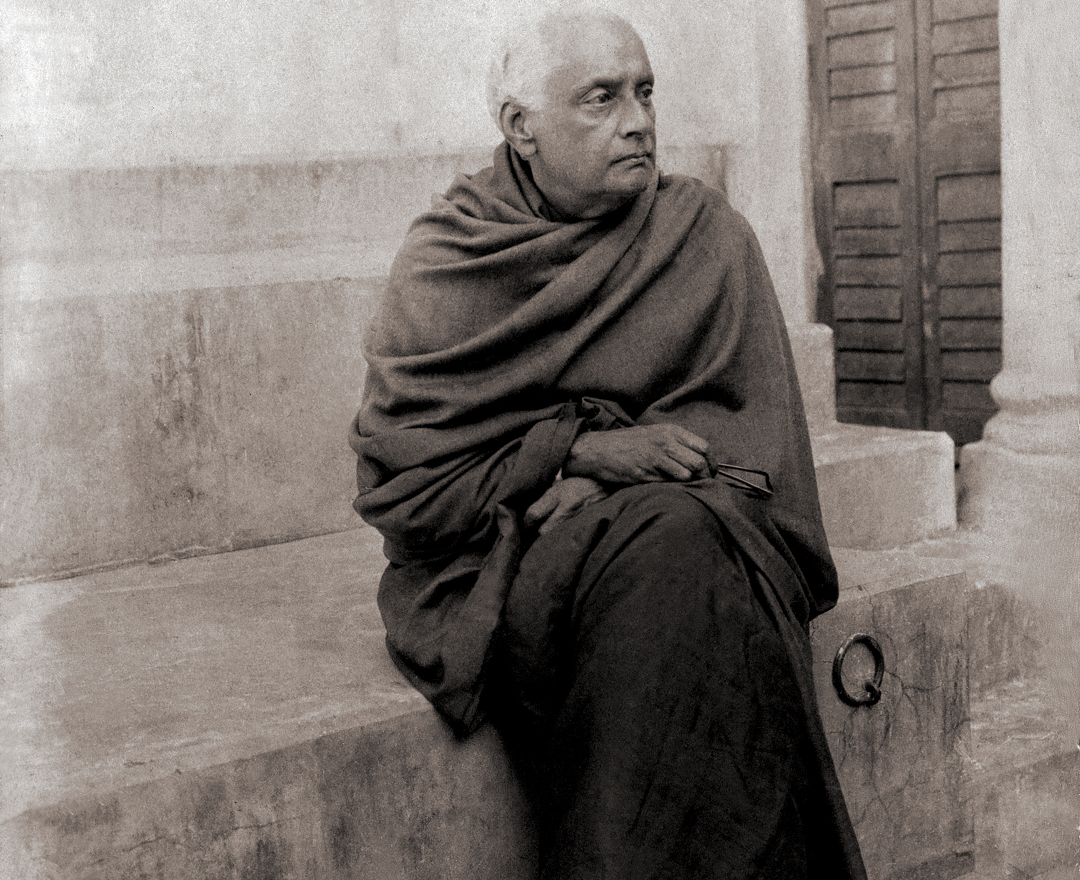
Gaganendranath Tagore (1867–1938)

September 17th marks the birthdays of two great Indian painters: M.F. Husain and Gaganendranath Tagore. While most people are familiar with Husain, there is far less awareness regarding Gaganendranath Tagore. He is considered a pioneer of Cubist art in India.
The true pioneer of Cubism in India and an acclaimed satirist, Gaganendranath Tagore was born on 17 September 1867. Often referred to as Gaganbabu, he was a pioneering modern Indian painter and cartoonist associated with the Bengal School of Art. The nephew of Nobel laureate Rabindranath Tagore and elder brother of Abanindranath Tagore, Gaganendranath was largely self-taught and became one of the first Indian artists to combine traditional Indian themes with global avant-garde styles, particularly Cubism.

Along with Rabindranath and Abanindranath Tagore, he played an important role in the cultural revival of Bengal in the early twentieth century. In 1907, the brothers were instrumental in establishing the Indian Society of Oriental Art in Calcutta.
Gaganendranath began painting relatively late, at around the age of thirty-eight. He learned Japanese brushwork from visiting Japanese artists associated with Santiniketan. His early works included Puri landscapes, portraits, figurative sketches, scenes of Calcutta, and illustrations for Rabindranath Tagore’s My Reminiscences. Among his early known works were Sibu Kirtania and Crows.

In 1914, six of his paintings were sent to London and subsequently exhibited in Paris. Around this period, Cubist ideas began to influence his work. Between 1920 and 1925, he developed a distinctive form of Indian Cubism, characterized by interlocking geometric planes, prismatic forms, and jagged, refracted lines of light. His semi-abstract compositions often created haunting, theatrical and labyrinthine spaces, with form serving as a means of expressing emotion.

Gaganendranath was equally renowned for his sharp and uncompromising social satire. From 1917 onwards, he published portfolios of cartoons, including Birupa Bajra, Adbhut Lok, and Baba Hullod, which satirized contemporary Bengali society, its social conventions, hypocrisy and colonial-era culture.
He was also a driving force behind the Vichitra Club, established at the Tagore family residence, and acquired a lithographic press for the club. His artistic experiments extended across numerous forms and techniques, including watercolour landscapes, atmospheric night scenes, Bengal School washes and Japanese brushwork.
His exhibitions in Berlin and Hamburg in 1923 attracted praise from German critics. Throughout his career, he demonstrated an exceptional ability to experiment with form, structure and visual language while retaining connections to Indian artistic traditions.
Gaganendranath Tagore passed away on 14 February 1938. His innovative synthesis of Indian traditions and modernist experimentation established him as one of the most significant pioneers of modern Indian art and an important early practitioner of Cubism in India.
Leave a Reply