By Dr Ved Prakash Bhardwaj

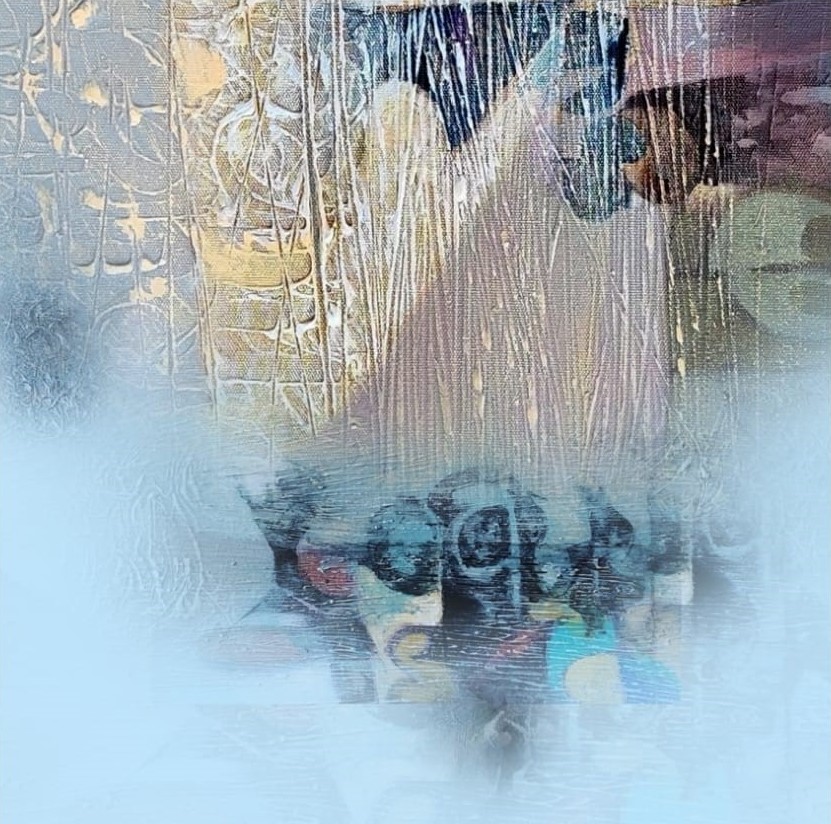
Everything we perceive can be understood as an image, yet every image possesses two dimensions: the physical and the metaphysical. While the physical aspect refers to what is visible on the surface, the metaphysical dimension encompasses memories, emotions, cultural associations, and the invisible layers of human existence. In abstract painting, the artist often seeks to move beyond the immediately visible and explore these deeper dimensions of life. The abstract paintings of Vijayraj Bodhankar reveal traces of such metaphysical enquiries, bringing together the elusive presence of memory and the complexities of human existence.

Reflecting on his artistic approach, Bodhankar observes, “Every day, we encounter numerous images of people, cities, and landscapes, but most of these images remain on the surface. I try to explore the deeper meaning of images. For this, I have chosen abstraction. It allows me to explore memories, culture, history, and ultimately, human existence in a different way.”

Vijayraj Bodhankar’s artistic journey began in childhood, when he was in the first grade. One day, while writing letters on a slate with a piece of chalk, he proudly told his mother that he had drawn a picture. His mother laughed gently and explained that what he had written were letters, not pictures. In retrospect, this childhood incident acquires a special significance in understanding the evolution of his artistic language. What began as an innocent confusion between writing and drawing would eventually become a defining feature of his artistic practice.

Bodhankar’s artistic sensibility is deeply rooted in his memories of his grandfathers, particularly their handwritten and painted pothis—traditional manuscripts associated with religious and cultural practices. These tangible objects, along with the memories and histories embedded within them, have become significant sources of inspiration for his artistic explorations. Through his paintings, he attempts to establish a dialogue between the past and the present, transforming personal recollections and inherited cultural references into a contemporary visual language.

In his earlier works, human figures appeared alongside abstract forms, suggesting a gradual transition from recognisable imagery towards a more introspective and non-representational mode of expression. Over time, Bodhankar moved increasingly towards abstraction, developing a distinctive visual vocabulary in which script functions as both motif and texture. The written mark, detached from its conventional linguistic meaning, becomes an autonomous visual element—an evocative trace of cultural memory, history, and lived experience.

Through the delicate layering of colours and the use of transparency, Bodhankar creates images that seem to emerge and dissolve simultaneously. His paintings often suggest the presence of images without presenting any identifiable subject. This apparent absence becomes a means of exploring the subtle relationship between visibility and invisibility, materiality and immateriality. The layered surfaces evoke the complexity of human existence, where physical experiences intersect with the intangible realms of memory, consciousness, and metaphysical reflection.

In his recent paintings, Bodhankar returns to the search for deeper meanings through colour, script-like motifs, and the suggestion of architectural structures. Fragments of script appear within the compositions, establishing an understated connection between historical inheritance and contemporary experience. These marks retain the resonance of writing while simultaneously acquiring the qualities of lines, patterns, and structural elements. Their arrangement creates a sense of spatial organisation, introducing architectural associations and adding a new dimension to his abstract vocabulary.

The recent works also evoke the atmosphere of landscapes in which traces of human presence seem to linger without becoming fully visible. The interplay of colour, layered surfaces, and architectural suggestions creates ambiguous spaces that oscillate between landscape, built environment, and abstraction. Buildings appear as faint impressions, while the landscape becomes a repository of memory and experience. Rather than depicting a specific place, these paintings evoke an imagined terrain shaped by time, history, and the persistence of human presence.

Vijayraj Bodhankar’s abstraction, therefore, is not merely an exploration of formal elements such as colour, texture, and composition. It is an ongoing inquiry into the relationship between memory and history, image and absence, and the physical and metaphysical dimensions of existence. By transforming the visual traces of inherited cultural traditions into a contemporary abstract language, he creates paintings that invite viewers to look beyond the surface and contemplate the invisible histories and experiences that shape human life.

Leave a Reply