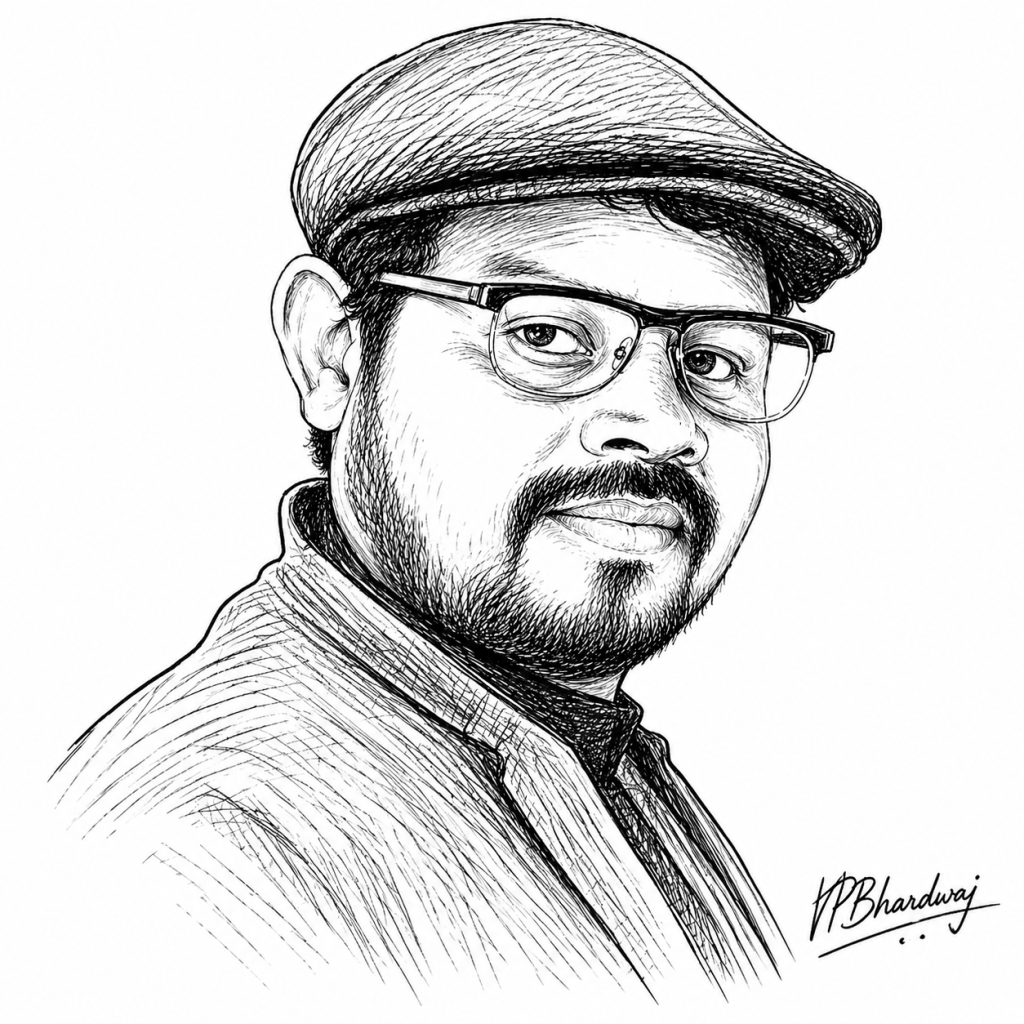
Asit Kumar Patnaik was born in Orissa on April 26, 1968. He received his bachelor’s degree in fine art from the Govt College of Art and Crafts, Khallikote, Orissa, and an MFA in painting from BHU, Varanasi, where he was a gold medallist.
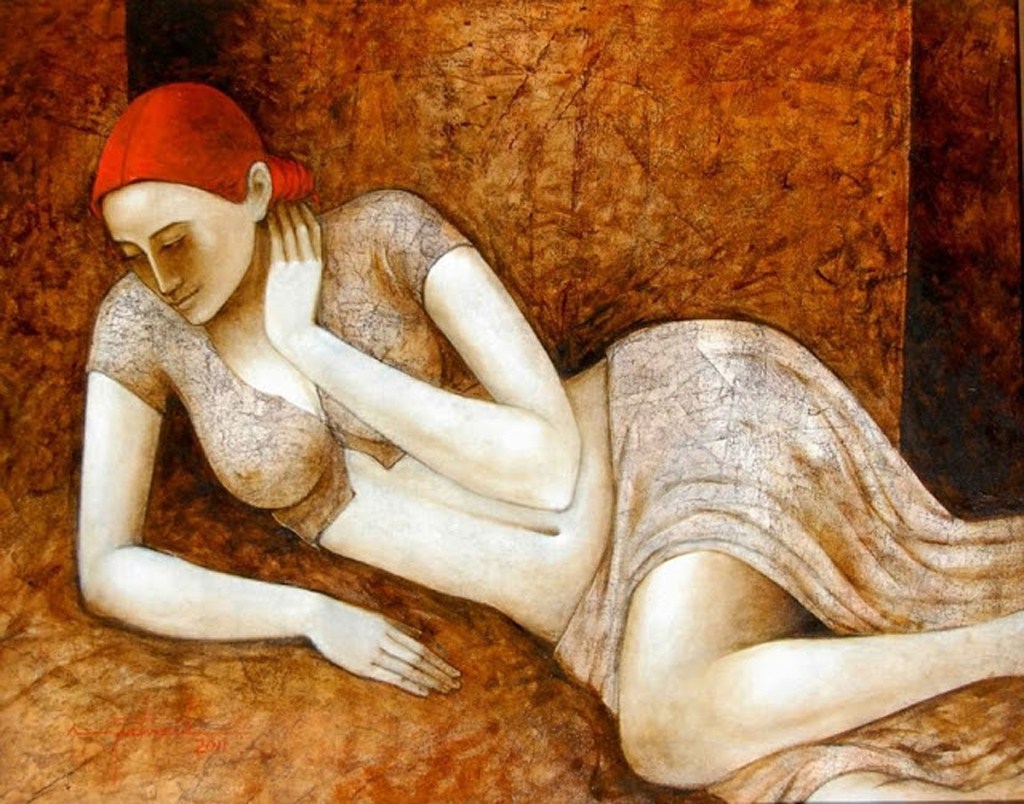
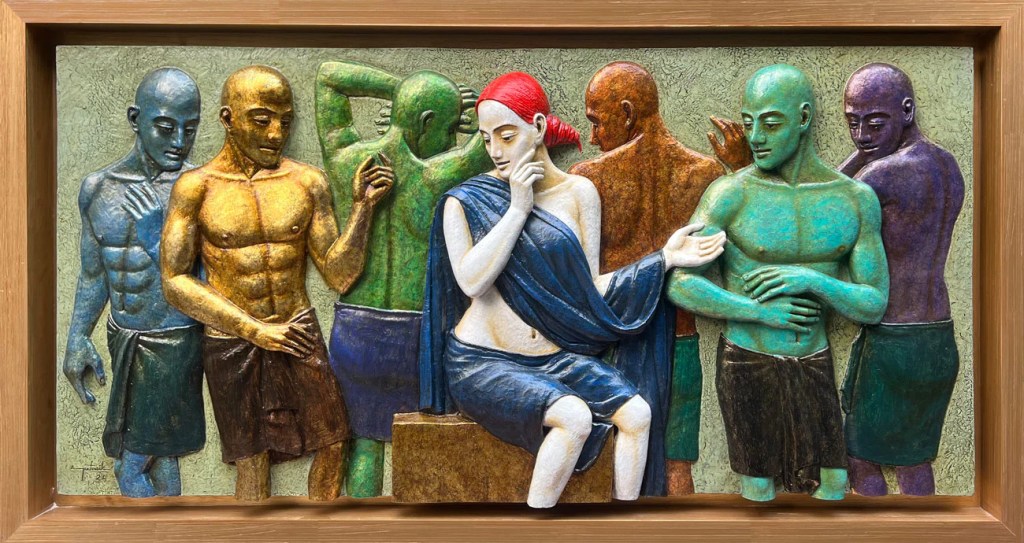
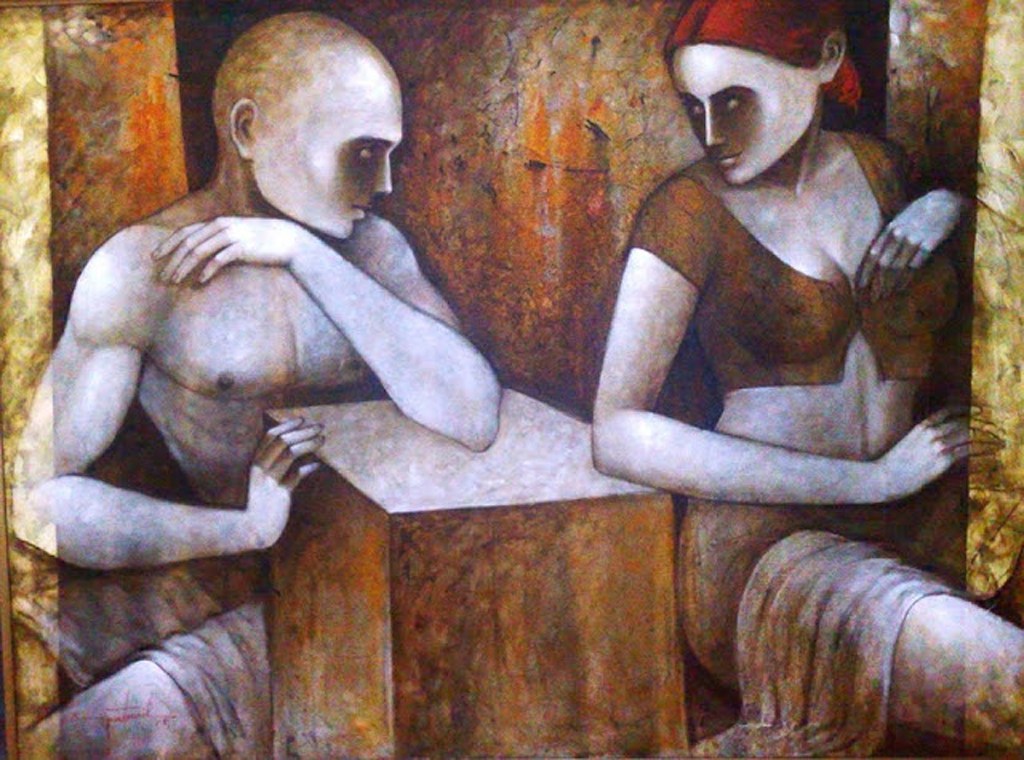
Asit’s paintings are often perceived as full of love and happiness. In many of his works, men and women are seen gazing at each other with affection. At first glance, this is what appears on the surface—the forms, the gestures, the visible emotions. However, when one looks more deeply, beyond the surface and into the totality of the composition—the human body, the colours, and the structure—one encounters a more complex emotional world.
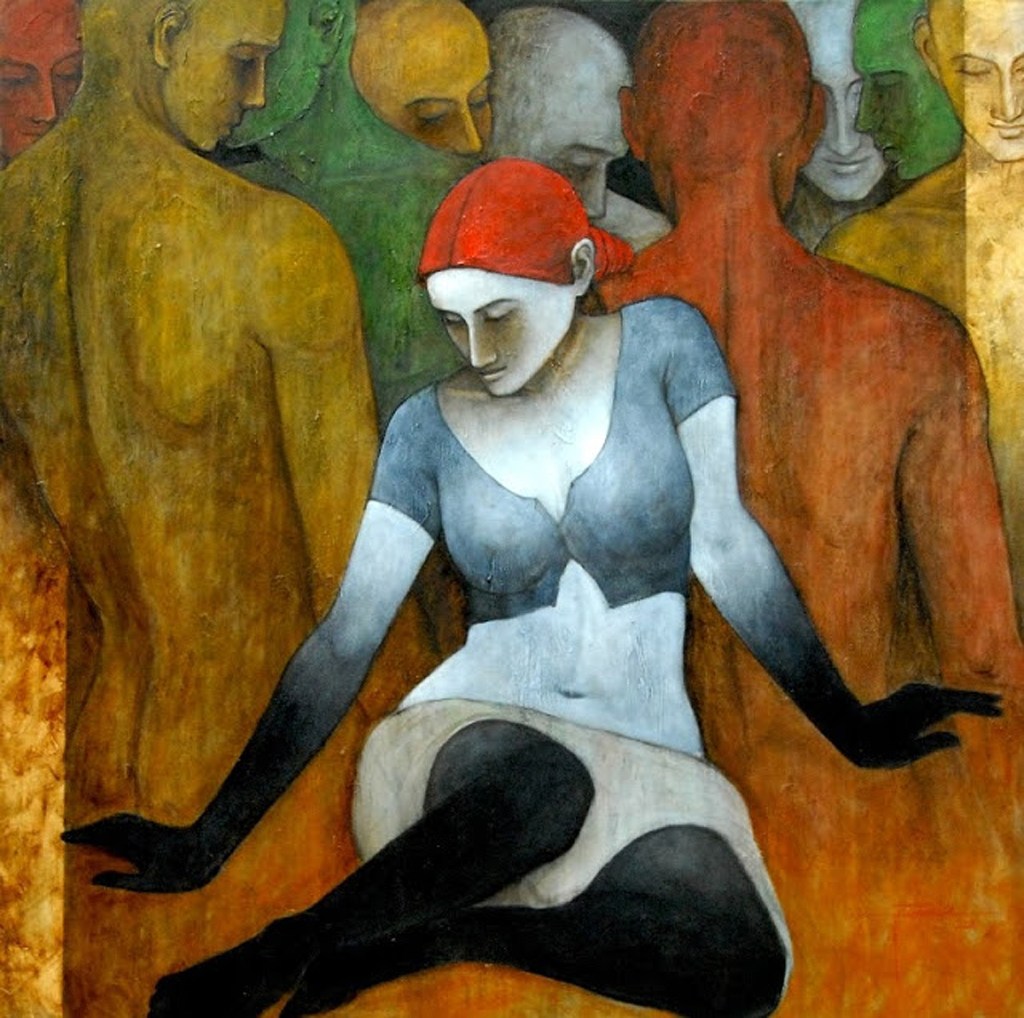
Beneath the apparent harmony lies a subtle anxiety. The figures look at each other passionately, yet their postures suggest something deeper and more mysterious—feelings that cannot be fully expressed in words but can only be experienced. The positioning of faces and hands reflects both affection and the tension within it. The soft, rounded forms of the bodies enhance this emotional duality. Asit reveals these emotions on canvas but leaves enough unsaid, allowing viewers to interpret and internalise the work in their own way. This openness is one of the strengths of his art.
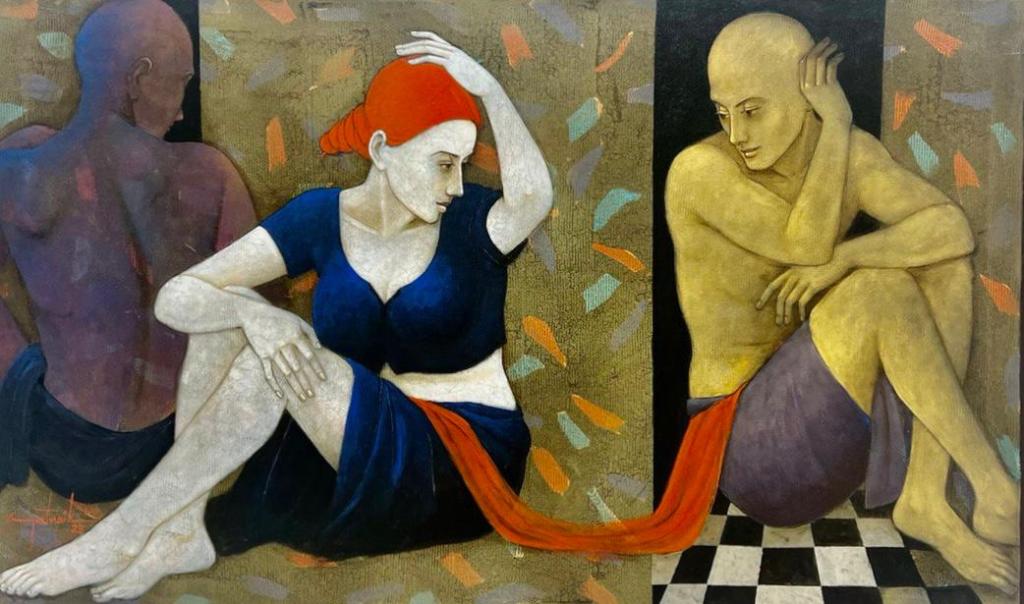
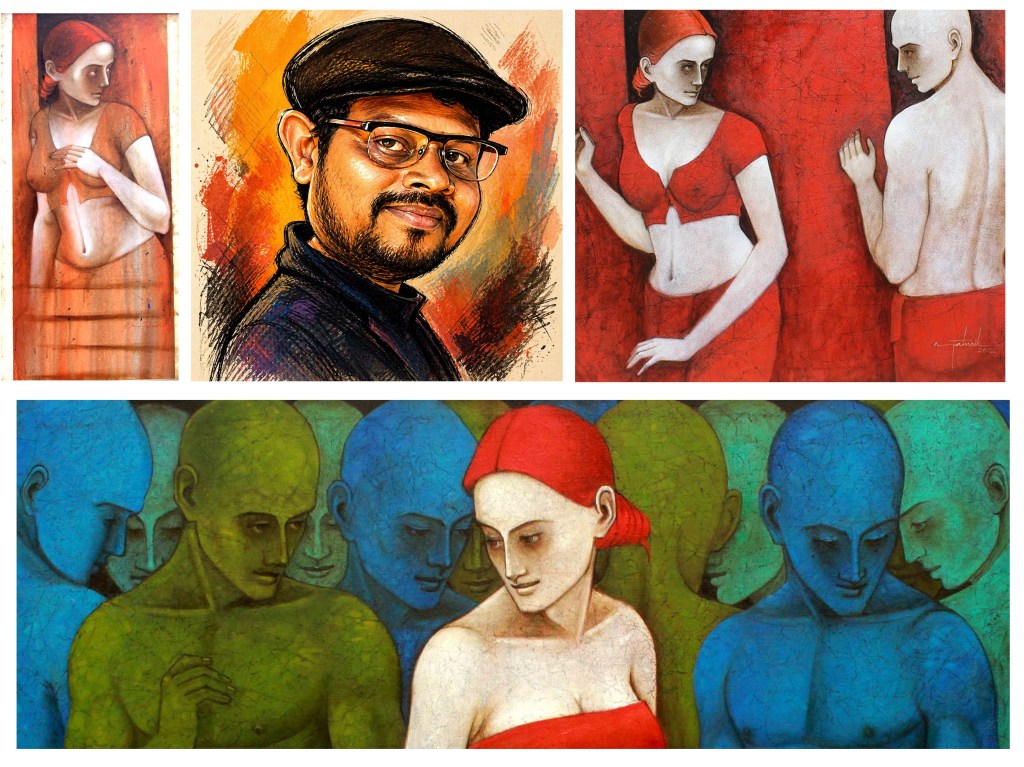
In some paintings, the male figure appears withdrawn or unaspiring, which itself becomes part of the narrative of love. His work conveys a strong zest for life, yet it is not erotic; rather, it resembles emotional poetry. Within this poetic space, colour plays a crucial role. The luminosity and softness of his palette, combined with rich textures, create an elegant atmosphere—not only within the painting but also in the viewer’s mind.
Asit K. Patnaik hails from Odisha, where he completed his BFA. Later, during his MFA in Varanasi, he began making live drawings of the ghats, local people, and everyday life. Drawing has always been central to his practice. He believes that mastery in figurative art requires strong command over drawing. For him, drawing is not merely practice but a complete form of artistic expression. His drawings often feature strong, forceful lines and textured surfaces, which later become integral to his paintings.
While many artists begin with figurative work and later move toward abstraction, Patnaik’s journey was somewhat the reverse. In his early years, he produced a significant number of abstract works. His first solo exhibition in New Delhi in 2001 showcased both figurative and abstract paintings along with drawings. At that time, he was navigating between abstraction and figuration, searching for his own artistic language. Although he enjoyed both, he eventually chose to focus primarily on figurative painting. However, abstraction was never entirely abandoned; it continues to appear in his backgrounds and textural treatments.
The human figure remains his greatest strength and defining identity. His figures are simple and undistorted, yet deeply expressive. During his BFA years, he worked extensively in an impasto style, using thick textures and varied materials. Even in his drawings, he creates texture through lines. After 2001, he began placing figures against textured abstract backgrounds, gradually developing a distinctive style. Though he primarily uses acrylics, his technique often resembles watercolour due to its transparency, resulting in a soft and refined visual effect.
In his earlier works, he typically depicted one or two figures, focusing on human relationships. As he states, “Mostly I want to portray the male-female relationship.” In his more recent works, he often paints multiple figures, though usually with a single female presence. He challenges societal assumptions about gender dynamics, suggesting that while women are often perceived as less powerful, in reality, men frequently surrender emotionally to them. Through bodily postures, he expresses the psychological and emotional states of his subjects.
His narratives revolve around partially clothed figures immersed in their emotions. The underlying theme of his work is the human psyche and interpersonal relationships within society. Marked by a seductive visual quality, his figurative compositions are both dramatic and harmonious, enriched by bold colours. Often working in series, his open-ended compositions explore complex human conditions, including generational conflicts and emotional tensions.
-By Dr Ved Prakash Bhardwaj
 Art News India
Leave a comment