
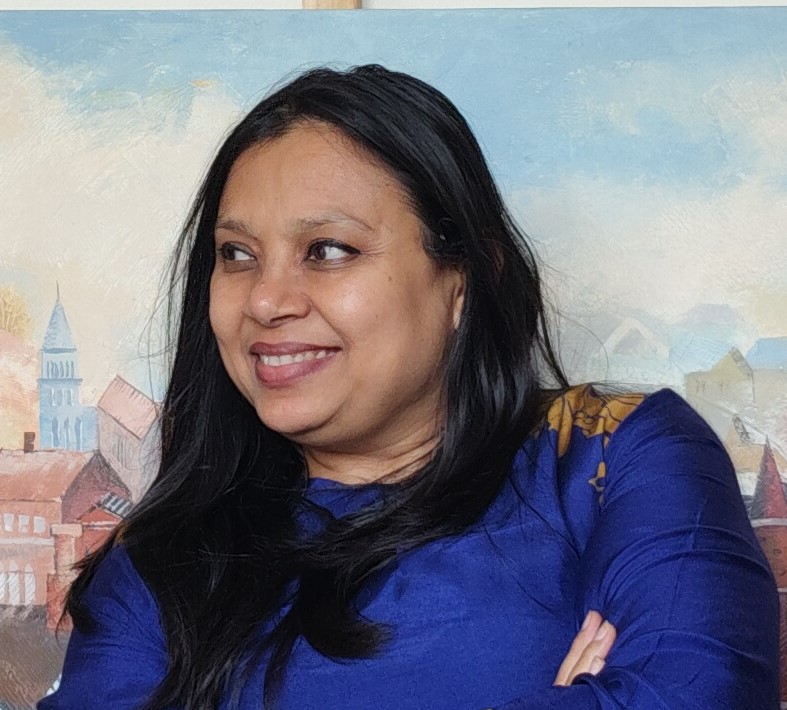
A city resides in memory—yet its identity remains undefined. Drawing from her travels across India and abroad, Smita Jain transforms lived experiences into a distinctive visual language. In her work, the city does not appear merely as a physical construct but as a living entity, where architecture, memory, aspiration, and human energy coexist and interact.
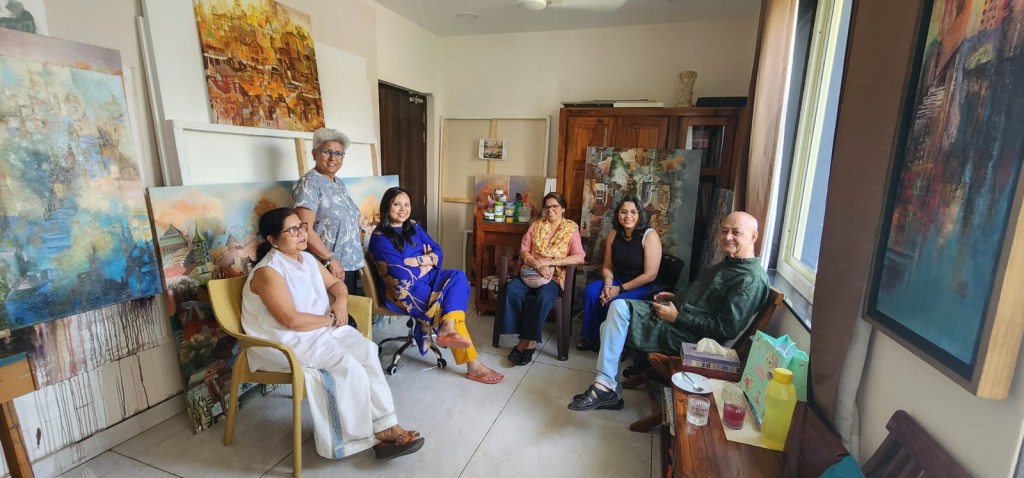
Smita Jain with artist friends Nitasha Jaini, Ragini Sinha, Shikha Gupta, Sanju Das and Dr Ved Prakash Bhardwaj in her studio.
The buildings that emerge on her canvas appear realistic, yet they are not bound by realism. Abstraction plays a central role, allowing these structures to transcend literal representation and instead evoke an experiential essence. At times, forms seem incomplete—as if paused mid-creation or fading within memory. This quality shifts the city from a fixed physical space into a psychological and emotional landscape.
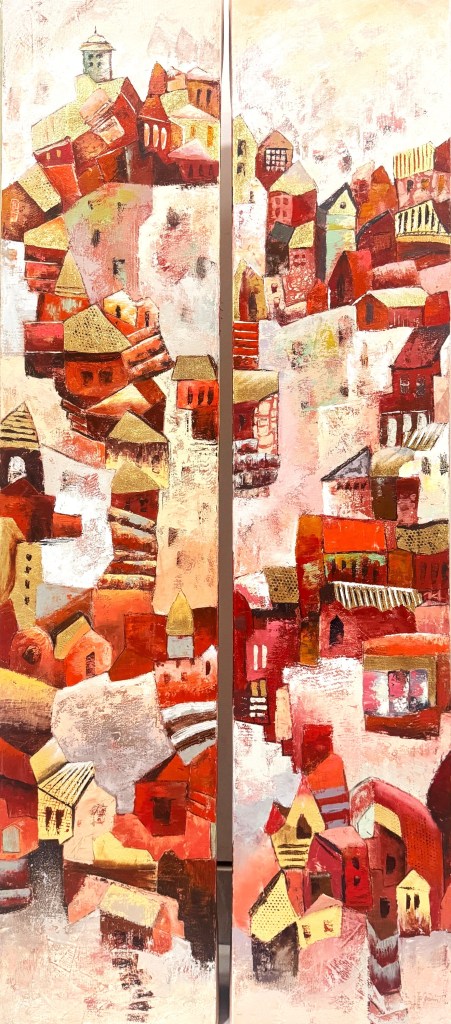
Her visual language is shaped through rhythmic lines, repeated forms, and a carefully balanced spatial composition. Together, these elements create a dynamic interplay between the tangible and the abstract. As a result, her cities feel both familiar and unfamiliar—simultaneously seen and remembered.
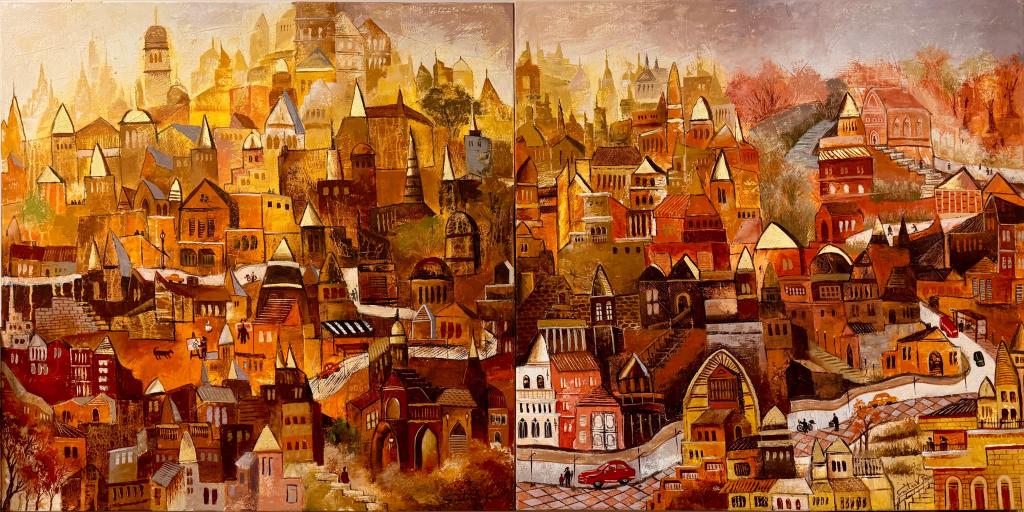
The triangular spires of her buildings form a distinctive motif, echoing pyramidal structures. This is not merely an architectural device but also a cultural signifier—one that resonates across civilizations as a universal symbol. When rendered in gold, these forms transcend ornamentation and come to embody energy, consciousness, and human aspiration.
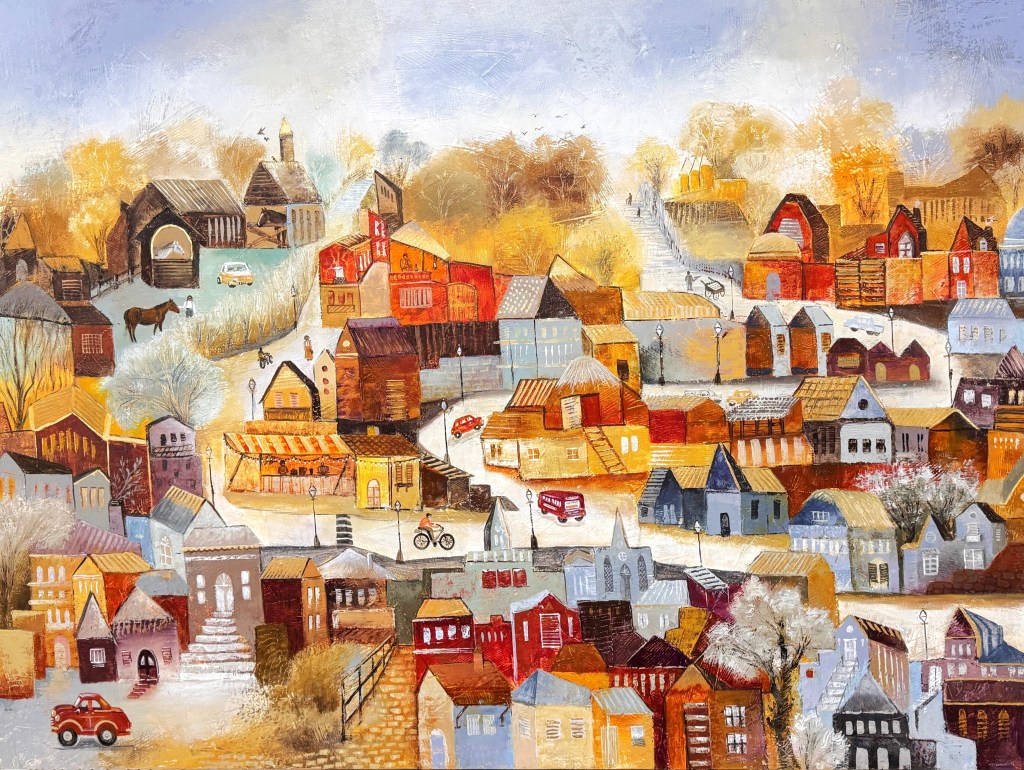
Colour is a vital component of her practice. Her palette—often composed of blues, browns, reds, and gold—does more than create visual appeal; it constructs meaning. These colours evoke a range of urban emotions: melancholy, mystery, vitality, and hope. Gold, in particular, introduces a symbolic luminosity that reflects the dreams and ambitions embedded in urban life.
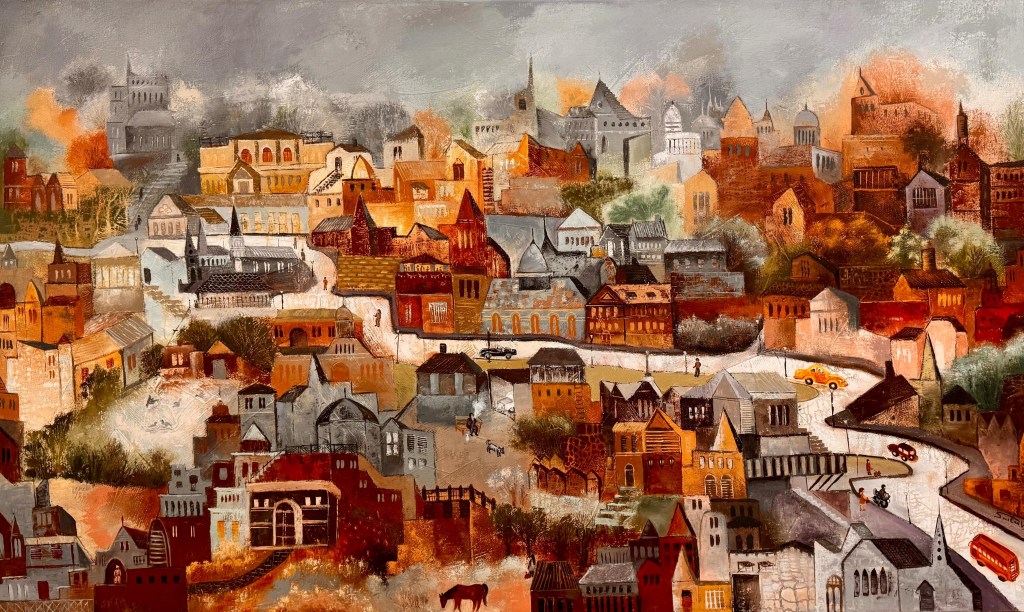
In her earlier works, abstraction appears more direct, as she explores existential questions through colour and form. This abstract sensibility gradually integrates into her urban imagery, resulting in cities that are not merely constructed spaces but complex amalgamations of experience, memory, and imagination.

At times, her cities emerge like blurred recollections—indistinct yet evocative. This ambiguity invites viewers to project their own memories and experiences onto the work. In her recent practice, her square, pillar-like compositions offer a renewed perspective on architectural form, maintaining a balance between structure and abstraction while reflecting a mature visual language.
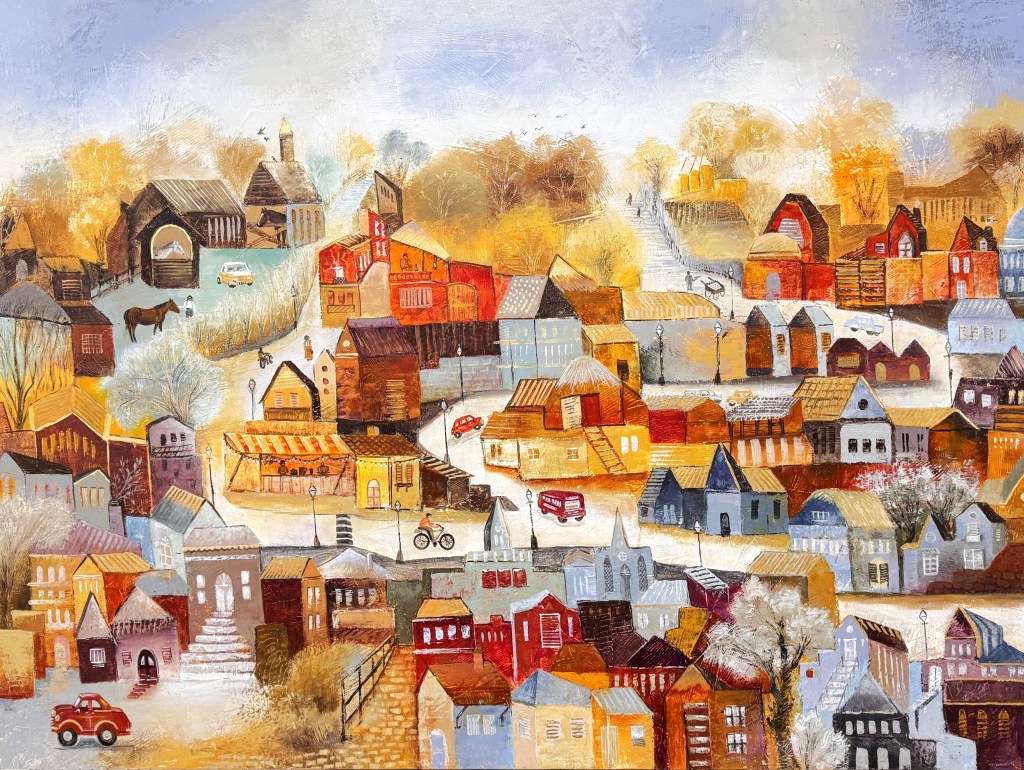
Ultimately, Smita Jain’s work creates a visual world that invites not just observation, but experience—where the city unfolds not outside, but within.
 Art News India
Leave a comment